Over 2.1 million Kenyans face severe food shortages as drought worsens
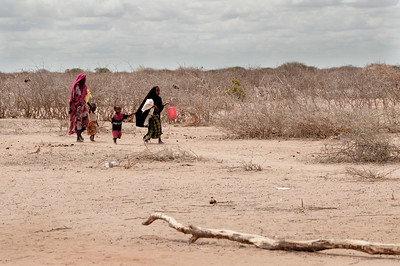
The National Drought Management Authority (NDMA) said the prolonged dry spell has already pushed seven counties into the alert stage as conditions continue to deteriorate.
Over 2.1 million Kenyans are expected to face severe food shortages by January 2026, with the drought situation projected to worsen as the country heads into the harsh January–March dry season.
In its latest National Drought Early Warning Bulletin, the National Drought Management Authority (NDMA) said the prolonged dry spell, coupled with depressed rainfall across several regions, has already pushed seven counties into the alert stage as conditions continue to deteriorate.
More To Read
- Mandera herders lose livestock and hope as Governor Mohamed Khalif announces emergency relief measures
- Governors sound alarm over looming drought, call for urgent grain and livestock reserves
- Garissa County launches digital livestock vaccination drive to boost pastoralist resilience
- Humanitarian agency appeals for Sh2.1 billion to aid 2.1 million Kenyans facing floods, drought
- Garissa governor calls for urgent action as 33,000 households face starvation
- Marsabit households get 100 camels in government push to restore livelihoods
The authority projects that the population facing high levels of food insecurity will surpass 2.1 million people by early next year, noting that most parts of the country are likely to receive near-average to below-average rainfall in December.
NDMA adds that parts of the North Eastern region are expected to experience highly depressed rainfall, heightening the risk of further deterioration.
Nine counties, including Wajir, Garissa, Kilifi, Kitui, Marsabit, Kwale, Kajiado, Isiolo and Tana River, are currently in the alert phase and “require close monitoring due to emerging drought conditions and potential impacts on food security, water access and pasture availability.”
The Authority states that Mandera is the only county in the alarm phase and “requires urgent action” amid escalating food insecurity and livestock losses.
The update comes days after the Council of Governors (COG) called for the urgent establishment of strategic grain, livestock and hay reserves, citing warnings of depressed short and long rains.
NDMA notes that another sixteen counties remain in the normal phase, but eight of them are showing signs of decline.
“The counties experiencing a worsening trend included Isiolo, Turkana, Makueni, Meru, Embu, Tharaka Nithi, Kitui and Marsabit,” reads the report in part.
The authority attributes the crisis to the late onset and poor performance of the October–November–December (OND) rains.
“ASAL counties, including Marsabit, Mandera, Wajir, Garissa, Isiolo, Meru, Tana River, Kilifi, Lamu, and Taita Taveta received less than 75 per cent of the October 2025 rainfall,” NDMA states.
The deteriorating conditions have triggered widespread livestock disease outbreaks, worsened by a lack of pasture and water.
“Cases of cattle deaths suspected to be due to trypanosomiasis were reported in Garissa, while in Kitui they were attributed to Black Quarter disease. Mandera recorded around 107 animal deaths linked to diseases and drought,” reads the report.
Nutrition indicators are also under strain as families struggle to cope. According to the bulletin, malnutrition rates remain within typical seasonal ranges in about 61 per cent of counties. However, the Authority says poor feeding and childcare practices contributed to worsening nutrition outcomes in about 39 per cent of the counties.
Last week, COG Chairman Ahmed Abdullahi issued a stark warning of impending livestock and human fatalities if urgent measures are not taken. He said parts of the country are already grappling with harsh conditions, noting that pastoralists remain vulnerable after losing more than three million animals in the last drought cycle.
“Livestock has started to die, and it’s time we established strategic livestock, feed, and hay reserves so that every drought that occurs does not wipe out our livestock economy,” he said.
According to the NDMA’s expanded drought classification, thirteen counties, Samburu, Turkana, Taita Taveta, West Pokot, Tharaka Nithi, Embu, Nyeri, Laikipia, Narok, Baringo, Makueni, Meru and Lamu, are in the normal drought phase but on a worsening trajectory. The bulletin warns that major livelihood zones in these counties are under stress, especially in the water and livestock sectors.
Top Stories Today